A missing tooth changes more than a photograph. It can affect how comfortably you chew, how clearly you speak, and how confident you feel when you smile. An implant supported bridge comparison can help you understand which replacement approach best protects your comfort, appearance, and long-term oral health before you commit to treatment.
The right answer is not always the same for every smile. The number and location of missing teeth, the condition of your gums and bone, your bite, your goals, and your budget all matter. A thoughtful consultation should make those details feel clear, never rushed.
Implant Supported Bridge Comparison: The Main Options
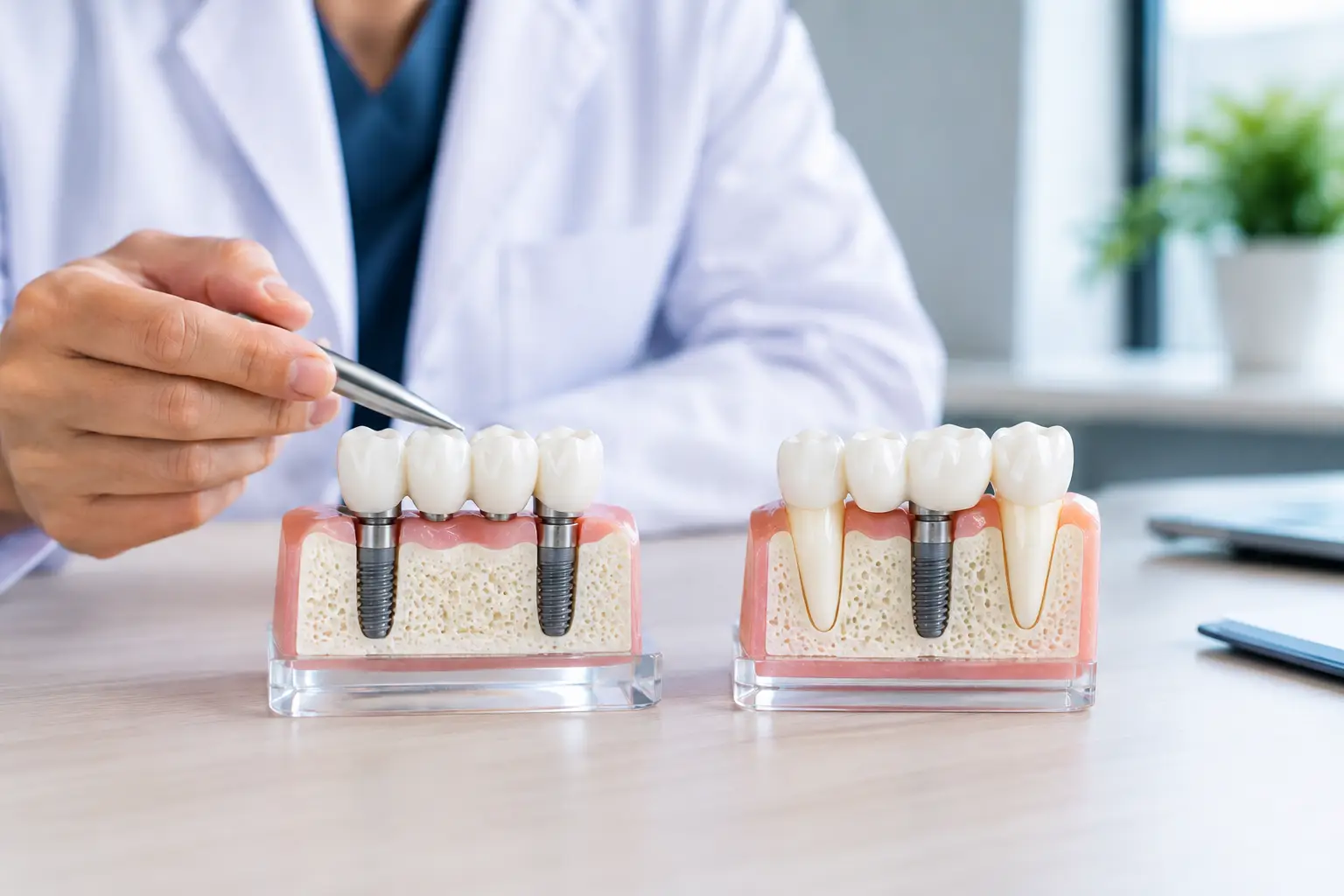
An implant-supported bridge replaces two or more missing teeth in a row. Rather than resting on neighboring natural teeth, the bridge is held in place by dental implants placed in the jawbone. The implants act like replacement tooth roots, while the visible bridge is carefully designed to restore the look and function of your smile.
This option is often compared with a traditional dental bridge, individual implant crowns, and removable dentures. Each has a place in modern dentistry, but they work very differently.
Implant-supported bridge
With an implant-supported bridge, two or more implants may support several replacement teeth. For example, if three teeth are missing side by side, your dentist may recommend two implants with a three-tooth bridge between them. The exact number of implants depends on the area of the mouth, bone support, bite forces, and overall treatment plan.
Because the bridge is anchored to implants, it stays fixed in place. You do not remove it at night, and it does not rely on adhesives. It can feel very close to natural teeth when eating, speaking, and smiling.
Traditional fixed bridge
A traditional bridge is also fixed in place, but it is supported by crowns on the natural teeth beside the gap. Those neighboring teeth need to be reshaped so they can hold the bridge.
A conventional bridge can be an appropriate solution when the adjacent teeth already need crowns or when implants are not advisable. However, it does not replace the missing tooth roots. It also means healthy neighboring teeth may need to be altered, even if they have no damage or decay.
Individual implant crowns
When each missing tooth has enough space and healthy bone around it, placing one implant for each missing tooth can be an excellent option. Each implant supports its own crown, similar to a natural tooth.
Individual implants may offer easier access for cleaning between teeth and can provide very natural-looking contours. Still, they are not automatically the best choice. For a larger gap, using an implant-supported bridge may reduce the number of implants needed while creating a stable, beautiful result.
Removable partial dentures
A removable partial denture fills the space left by missing teeth and can be a more affordable starting point. It typically uses clasps or a gum-colored base for support, and it must be removed for cleaning.
For some patients, a partial denture is a practical short-term solution or the preferred option for medical or financial reasons. Others find that it moves while eating, feels bulky, or does not provide the confidence they want from a long-term restoration. Unlike implants, a removable denture does not stimulate the jawbone beneath missing teeth.
Why Implant Support Can Make a Difference
When a tooth is lost, the bone that once supported its root can gradually shrink. This process is called bone resorption, and it can change the shape of the jaw over time. Dental implants provide stimulation within the bone, helping preserve the area more effectively than a bridge or removable appliance that sits above the gumline.
An implant-supported bridge also keeps the adjacent natural teeth untouched. That can be particularly valuable if those teeth are healthy and strong. Instead of placing crowns on them for support, the implants carry the bridge independently.
Stability is another major benefit. A well-planned implant bridge is designed to handle everyday chewing forces without shifting. Patients often appreciate being able to enjoy meals, conversations, and social events without worrying about a restoration moving out of place.
That said, implants are a surgical treatment and require adequate bone, healthy gums, and a commitment to daily care. They also usually involve a longer treatment timeline than a traditional bridge. The best option balances these factors rather than focusing on one benefit alone.
What the Treatment Process Feels Like
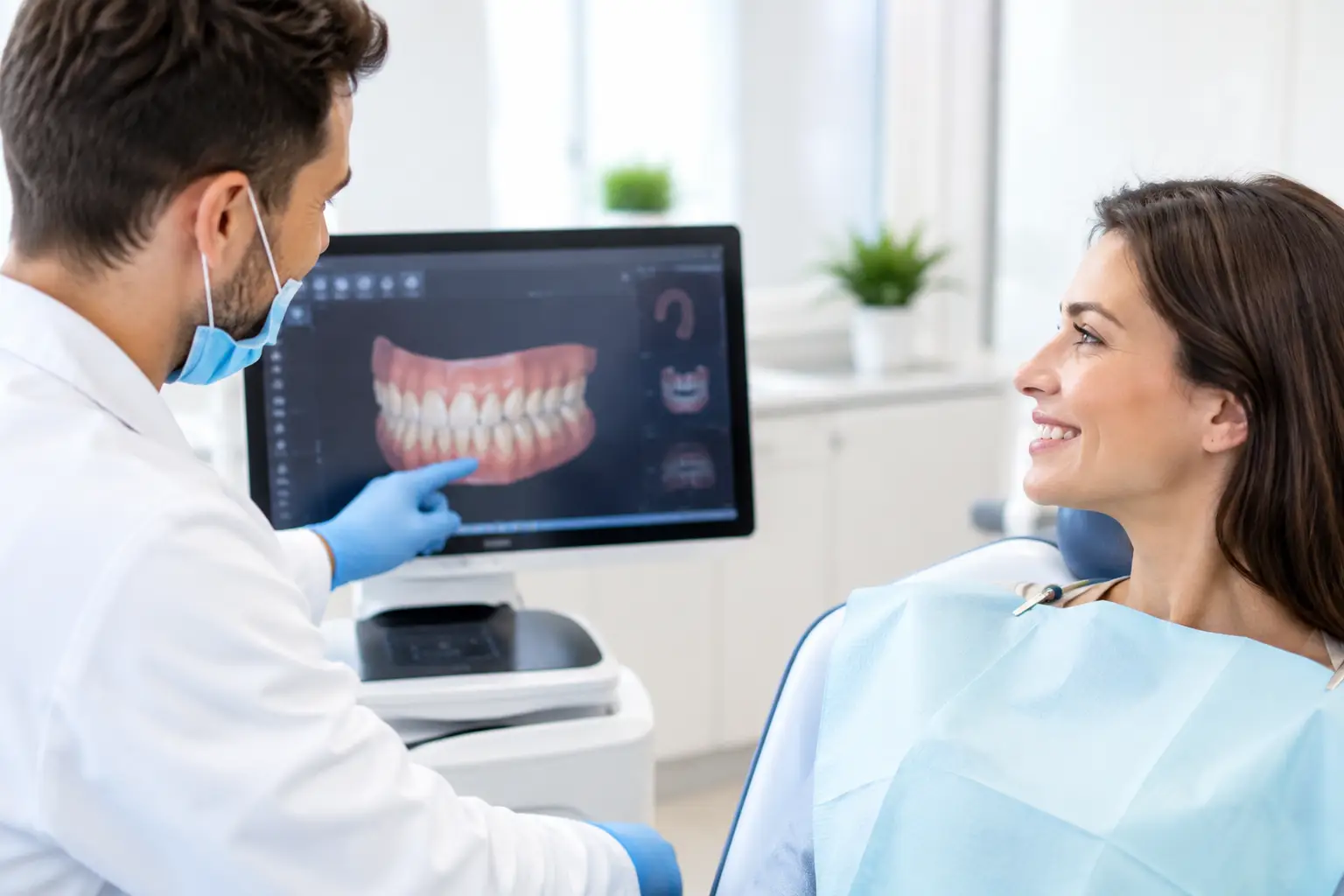
Implant treatment is usually completed in stages, but your experience should feel organized and supported from the start. At SoFlo Dental Studio, digital imaging and scans can help Dr. Carmine Scarfone evaluate bone levels, map implant placement, and plan how your bridge will look alongside your natural teeth.
The first step is a detailed consultation. Your dentist reviews your medical history, examines your gums and bite, and discusses the goals you have for your smile. If gum disease, infection, or a failing tooth is present, those concerns need to be addressed before implant placement.
During implant surgery, the implant posts are placed in the jawbone. Local anesthesia is used to keep you comfortable, and sedation options may be discussed when appropriate. For patients who feel anxious about dental procedures, small comforts such as noise-canceling headphones, an eye mask, and a neck pillow can make a meaningful difference.
The implants then need time to integrate with the bone. Healing often takes several months, though timing varies by patient and treatment area. In some cases, a temporary tooth replacement may be available while you heal. Once the implants are stable, your final bridge is created to complement your facial features, bite, and preferred tooth shade.
Comparing Cost and Long-Term Value
An implant-supported bridge typically has a higher upfront cost than a traditional bridge or removable partial denture. The investment includes implant surgery, components that connect the bridge to the implants, the final restoration, imaging, and any additional treatment needed to prepare the mouth.
A traditional bridge may cost less initially, especially if adjacent teeth already need crowns. Yet it may require replacement over time, and future care for the supporting teeth can affect its overall value. If one supporting tooth develops a problem, the entire bridge may need attention.
An implant-supported bridge can be a strong long-term investment because it preserves neighboring teeth and supports the jawbone. Still, no dental restoration is maintenance-free or guaranteed for life. Materials can wear, screws can occasionally loosen, and gum health remains essential.
Insurance coverage for implants varies widely. A transparent treatment discussion should include estimated costs, insurance benefits when available, and payment options such as financing or a membership plan. Knowing the financial picture early gives you space to make a decision without pressure.
How to Care for an Implant-Supported Bridge
An implant bridge is fixed, but it needs attentive home care. Brush twice daily with a soft toothbrush and use the cleaning tools recommended by your dental team. Depending on the bridge design, an interdental brush, floss threader, or water flosser may help clean underneath the replacement teeth and around the implants.
Professional cleanings and regular examinations are equally important. Your hygienist can check areas that are difficult to reach at home, while your dentist monitors the fit of the bridge, the health of surrounding gums, and your bite.
Smoking, uncontrolled diabetes, untreated gum disease, and inconsistent hygiene can increase the risk of implant complications. These factors do not always rule out implants, but they deserve an honest conversation before treatment begins.
Questions Worth Asking at Your Consultation
A good treatment recommendation should be easy to understand. Ask why an implant-supported bridge is being recommended over individual implants, a traditional bridge, or a removable partial denture. Ask how many implants you may need, whether bone grafting is likely, what your temporary restoration options are, and how you will clean the final bridge.
You can also ask to see a digital preview or visual explanation of the proposed result. Seeing the plan before treatment helps connect the clinical details to what matters most: how your smile will look, feel, and function in daily life.
Choosing a tooth replacement is a personal decision, not a test you need to pass. Take the time to ask questions, understand the trade-offs, and choose a plan that helps you eat, speak, and smile with greater ease for years ahead.