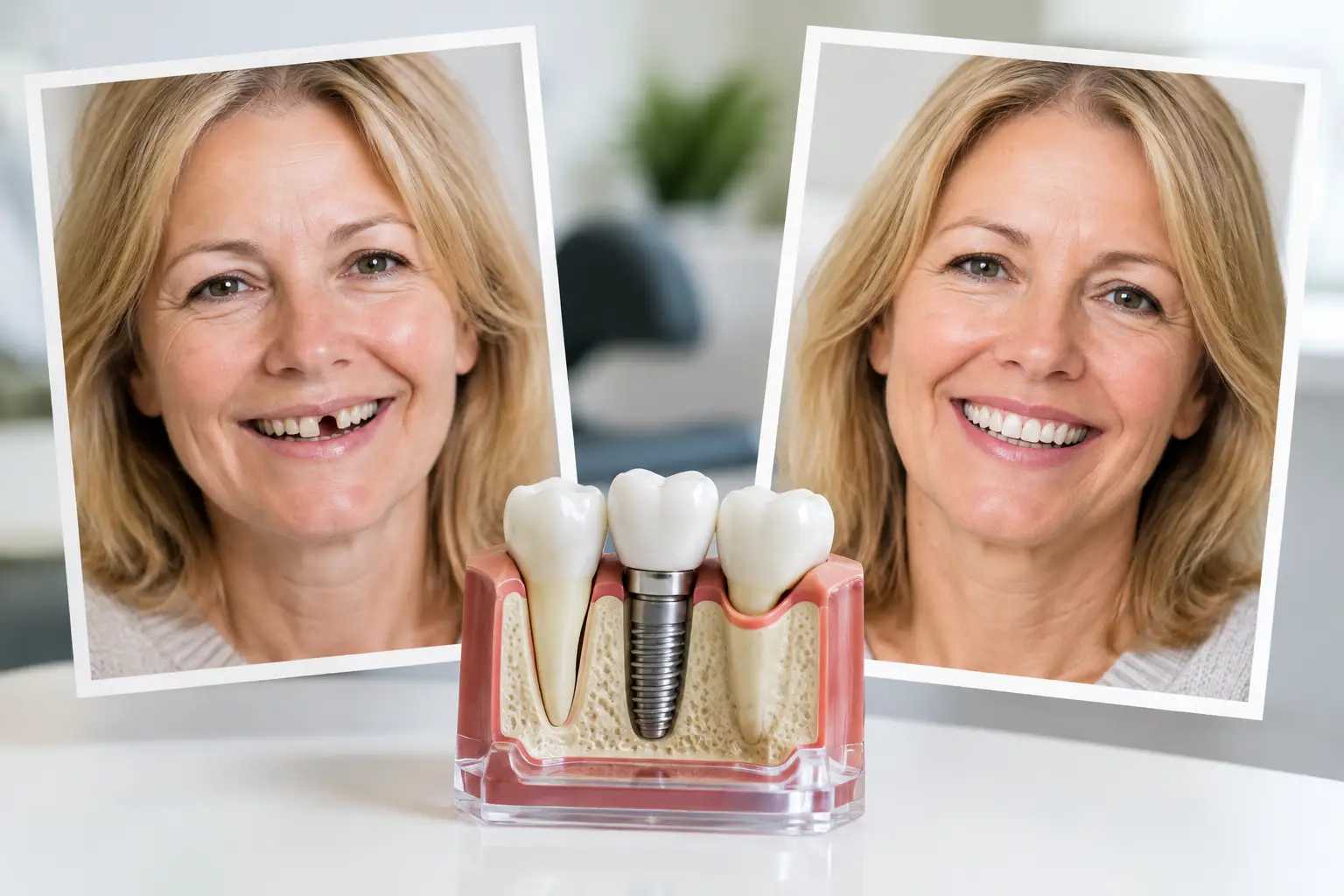
A missing tooth can change more than a photograph. You may start chewing on one side, covering your smile when you laugh, or avoiding foods you once enjoyed. Looking at dental implant before after examples is a sensible first step, but the most useful photos show more than a new tooth. They reveal how carefully the final result has been planned around the gums, neighboring teeth, bite, and your natural smile.
A beautiful implant restoration should not announce itself. It should look comfortable, feel stable, and let you get back to daily life without giving that missing space a second thought.
What Dental Implant Before After Examples Can Show
The “before” image often tells a story that is not immediately obvious. A tooth may be missing after an extraction, injury, failed root canal, or years of wear. In some cases, the surrounding teeth have shifted into the gap. The gum tissue may have receded, and the jawbone beneath the missing tooth may have begun to lose volume.
The “after” image may show a natural-looking crown in that space, but the result rests on several details that a photo cannot fully capture. A dental implant is a small titanium post placed in the jawbone to serve as a tooth root. After it integrates with the bone, a custom crown is attached. The crown is the visible part, while the implant provides the support underneath.
When reviewing examples, look beyond the tooth color. Notice whether the shape of the new tooth suits the face and smile, whether the gumline looks balanced, and whether the restoration blends with the teeth beside it. The best outcome is rarely the brightest or most perfectly uniform one. It is the one that looks like it has always belonged there.
Three Common Before and After Scenarios
One missing front tooth
Replacing a front tooth is one of the most detail-sensitive implant cases. The visible crown needs to match its neighboring teeth in shade, translucency, shape, and length. Just as important, the gum around the implant must frame the crown in a natural way.
In a strong before-and-after result, the final tooth does not appear flat, bulky, or darker than the teeth around it. The gum contour is carefully considered, especially when a patient has a high smile line. Some patients need bone or gum grafting before implant placement to support that result. It can add time to the process, but it may make a meaningful difference in long-term esthetics.
A missing back tooth
A missing molar may be less visible in photos, yet it matters greatly for comfort and bite balance. Before treatment, patients may chew mostly on the other side or notice food catching in the open space. Over time, nearby teeth can drift or tip toward the gap.
The after result for a back-tooth implant is often less about a dramatic visual change and more about function. A properly restored implant can help distribute chewing forces and make meals feel normal again. The crown is designed to meet the opposing tooth correctly, rather than simply filling the space.
Several missing teeth or a failing bridge
For patients missing multiple teeth, before-and-after examples can show how much a smile changes when support and proportion are restored. One option may be individual implants. Another may be an implant-supported bridge, which replaces several teeth using strategically placed implants.
The right approach depends on bone availability, bite forces, the health of remaining teeth, and the patient’s goals. An implant-supported bridge can be an excellent solution, but it is not automatically the answer for every gap. Thoughtful planning protects both appearance and function.
Why Results Can Look Different From Person to Person
Before-and-after images are inspiring, but they should never be treated as a promise. Every mouth begins in a different place. Bone density, gum health, the location of the missing tooth, medical history, grinding habits, and healing response all shape the treatment plan.
Timing matters, too. Sometimes an implant can be placed shortly after a tooth is removed. Other times, the area needs time to heal first, or a bone graft is recommended to rebuild a stronger foundation. A temporary tooth may be part of the plan, particularly when a front tooth is involved.
The final crown is usually placed after the implant has had appropriate time to heal and integrate. While it may be tempting to focus only on the finish line, the stages in between are what help create a result that is stable, comfortable, and natural-looking.
What a Thoughtful Implant Plan Includes
A good implant plan begins with clear information, not pressure. At SoFlo Dental Studio, the conversation can start with digital imaging and scans that help Dr. Carmine Scarfone and the team evaluate the bone, gums, bite, and space available for your new tooth. This gives you a clearer picture of what treatment may involve before you commit.
For many patients, the planning process includes discussing the restoration itself before surgery. Will the new tooth need to match a crown, veneer, or naturally worn teeth nearby? Is whitening something to consider before choosing the final crown shade? Does the bite need attention to reduce stress on the implant? These are small but meaningful decisions.
Comfort matters throughout the process as well. If dental visits have felt rushed or intimidating in the past, asking questions early can make a real difference. You deserve plain-language explanations, time to consider your options, and a setting that helps you feel at ease. Small comforts, from a neck pillow to noise-canceling headphones, can help make a treatment visit feel far more manageable.
Questions to Ask When Viewing Implant Results
Photos can help you recognize the kind of outcome you like, but a consultation should give you context. Ask whether the example involved grafting, how long healing took, and whether the final image shows a temporary or permanent crown. A temporary can look quite good, but it is not the same as the custom restoration designed for the finished result.
It is also helpful to ask how the dentist will manage the gumline, match the crown to your smile, and check your bite after placement. For back teeth, function may be the priority. For front teeth, function and fine cosmetic details often carry equal weight.
If you clench or grind your teeth, ask whether a nightguard is recommended. An implant crown cannot decay, but the gums and bone around the implant still need consistent care. Brushing twice daily, cleaning between teeth, and keeping regular dental visits are part of protecting your investment.
A Realistic View of the Timeline and Cost
Dental implants are designed as a long-term tooth replacement option, but they are not a one-visit fix in every case. The complete process can take several months, particularly when extraction healing or grafting is needed. That timeline can feel slow when you are eager to move on, yet it allows the foundation to heal properly before the final crown is placed.
Cost also varies because the treatment is highly individual. Your estimate may include imaging, extraction, grafting, implant placement, the abutment, and the final crown. Asking for a transparent treatment plan helps you understand what is included and whether insurance benefits, financing, or a membership plan may apply.
A lower initial price is not always the lower-cost choice over time if it leaves out essential planning or follow-up care. The goal is not to add unnecessary treatment. It is to choose the care that supports a predictable result for your specific smile.
The Most Meaningful After Photo Is Your Own
Dental implant before after examples can help you picture what is possible, especially when a missing tooth has affected how you eat or feel about your smile. Still, your best result will be built around your anatomy, goals, and comfort level, not copied from someone else’s photograph.
A calm consultation is a good place to start. Bring the questions you have, share what you hope will change, and let the treatment plan be shaped around a smile that feels natural to you.