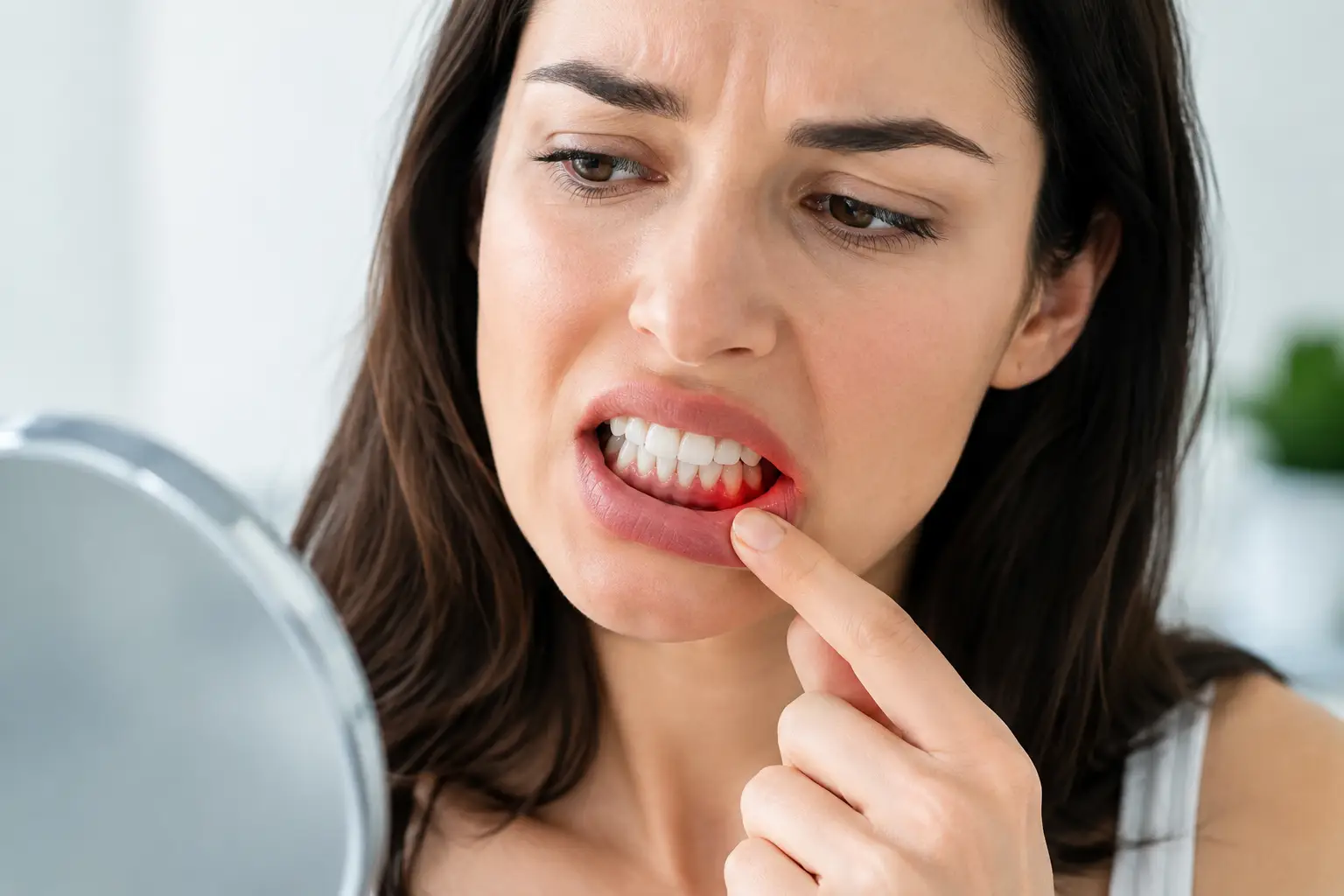
A pink streak in the sink after brushing can be easy to dismiss, especially if it does not hurt. But bleeding gums are not something to simply brush off. Healthy gums generally should not bleed during brushing, flossing, or eating. In many cases, bleeding is an early signal that your gums need more consistent care or professional attention.
The reassuring part is that gum bleeding is often treatable, particularly when it is addressed early. A gentle dental visit can help identify the reason behind the bleeding and create a plan that feels clear, comfortable, and manageable.
Why Bleeding Gums Happen
The most common cause is plaque buildup along and just below the gumline. Plaque is a soft, sticky film of bacteria that forms throughout the day. When it is not thoroughly removed with brushing and cleaning between the teeth, it can irritate gum tissue. The gums may become tender, puffy, redder than usual, and more likely to bleed.
This early stage of gum inflammation is called gingivitis. Gingivitis can often improve with professional cleanings and better daily plaque removal. Left untreated, however, it can progress to periodontitis, a more serious form of gum disease that can damage the tissue and bone supporting your teeth.
Bleeding can also happen when someone starts flossing after a long break. That does not mean flossing is harming the gums. More often, it means the gums were already inflamed. With gentle, consistent flossing or another between-teeth cleaner, minor bleeding should typically begin to improve within a week or two. If it continues, it is time for an exam.
Other factors can contribute as well. Hormonal changes during pregnancy, puberty, or menopause can make gums more sensitive to plaque. Smoking and vaping can affect gum health and healing, sometimes masking bleeding until disease has become more advanced. Dry mouth, poorly fitting dental work, aggressive brushing, and certain medications can also play a role.
Blood thinners can make bleeding more noticeable, but they do not usually create gum disease on their own. Never stop a prescribed medication because of bleeding gums without speaking to the medical provider who prescribed it.
What Your Gums May Be Trying to Tell You
Bleeding is one clue, not a complete diagnosis. Pay attention to what comes with it. Persistent bad breath, a bad taste, gum tenderness, swelling, receding gums, or teeth that appear longer can all point to gum inflammation or periodontal disease. Spaces developing between teeth, changes in how your bite feels, or loose teeth deserve prompt professional care.
Sometimes the source is very localized. Food may be trapped around a tooth, a rough edge on a filling may be irritating the area, or a dental appliance may need adjustment. If bleeding starts around one specific tooth, especially with pain, swelling, or a small bump on the gum, do not wait for your next routine cleaning. An exam can rule out infection or another issue that needs treatment.
Less commonly, frequent unexplained bleeding can be connected to a medical condition or nutritional concern. If you also notice easy bruising, frequent nosebleeds, fatigue, or bleeding elsewhere, contact your physician as well as your dentist. Your dental team can help assess what is happening in your mouth, but whole-body symptoms deserve broader evaluation.
What to Do When Your Gums Bleed
Do not respond by avoiding the area. Plaque can build up quickly where brushing and flossing are skipped, which can make inflammation worse. Instead, slow down and use a gentle, consistent routine.
Choose a soft-bristled toothbrush and angle the bristles toward the gumline. Use small, gentle motions rather than hard scrubbing. Brushing harder does not clean better, and it can irritate gums or wear down enamel over time. Brush for two full minutes twice a day with fluoride toothpaste.
Clean between your teeth once daily. Traditional floss works well when used carefully, but it is not the only option. Interdental brushes, water flossers, and floss holders can be helpful depending on the spacing between your teeth, dental work, dexterity, and personal preference. The best option is the one you can use thoroughly and consistently.
A few practical habits can make a difference:
- Replace a frayed toothbrush or electric brush head about every three months.
- Use a light touch, especially around tender areas.
- Keep scheduled hygiene visits, even when your teeth feel fine.
- Avoid tobacco products, which can compromise gum health and healing.
Mouthwash may be useful in some cases, but it is not a substitute for brushing, cleaning between the teeth, and professional care. Your dentist or hygienist can recommend whether a therapeutic rinse is appropriate for your needs.
When to Schedule a Dental Visit for Bleeding Gums
If bleeding lasts more than one to two weeks despite gentle daily care, schedule a dental appointment. You should also call sooner if you have significant swelling, pain, pus, a fever, a loose tooth, facial swelling, or trouble swallowing or breathing. Those symptoms can indicate an infection that needs timely attention.
For many patients, the first step is simpler than they expect. A dental hygienist will carefully assess plaque and tartar buildup, measure the health of the gum tissue, and look for areas that are difficult to clean. Tartar is hardened plaque that cannot be removed at home, even with excellent brushing. A professional cleaning removes it safely from places a toothbrush cannot reach.
If gum disease has progressed below the gumline, a deeper periodontal cleaning may be recommended. This treatment is designed to remove bacterial buildup from the roots of the teeth and give inflamed tissue a better chance to heal. The exact recommendation depends on your gum measurements, X-rays, bone support, and overall health – not simply on whether your gums bleed.
A thoughtful team should explain what they see, why a treatment is recommended, and what each step is intended to accomplish. There should be room for questions. If dental visits make you anxious, tell the office before you arrive. Comfort measures, a slower pace, and clear communication can make it much easier to get the care you need.
Can You Prevent Gum Bleeding From Coming Back?
Usually, yes, but prevention is not one-size-fits-all. Someone with tightly spaced teeth may benefit from floss, while someone with wider spaces or a bridge may clean more effectively with interdental brushes or a water flosser. People with diabetes, a history of periodontal disease, or extensive dental restorations may need more frequent maintenance visits than someone with low risk.
Professional care and home care work together. Cleanings remove hardened buildup and allow your dental team to spot subtle changes early. At home, daily brushing and between-teeth cleaning prevent plaque from sitting at the gumline long enough to trigger inflammation.
It is also worth looking at the bigger picture. A balanced diet, good hydration, stress management, and control of conditions such as diabetes can support oral health. Pregnancy is another time to stay especially consistent with dental visits and gum care, since hormonal changes can make inflammation more likely.
At SoFlo Dental Studio, gum care is approached without judgment or pressure. Whether you are overdue for a cleaning or noticing a new change, the goal is to understand the cause, help you feel comfortable, and give you a realistic path forward.
A little blood in the sink is not a reason to panic. It is a reason to pay attention. With gentle daily care and the right professional guidance, healthier gums are often well within reach.