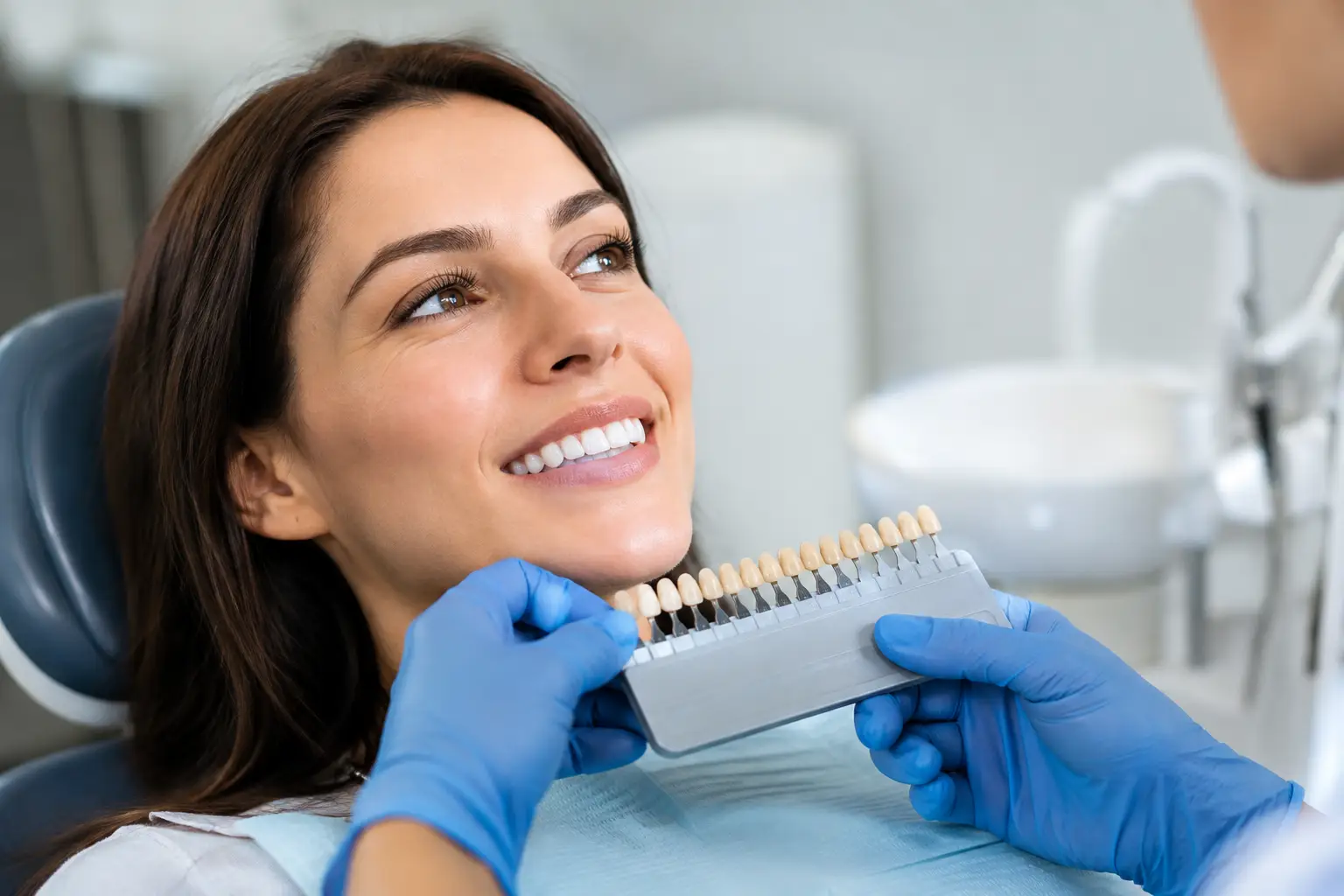
A crown, veneer, clear aligner, or implant often begins with one small but meaningful step: creating an accurate model of your teeth. For many patients, the question of digital scans versus impressions is really a question of comfort. Will there be a bulky tray? Will you need to hold still while material sets? Can you see what your dentist is planning before treatment begins?
The good news is that modern dentistry gives us more options than ever. Digital scanning has changed the experience for many patients, especially those with a sensitive gag reflex or dental anxiety. Traditional impressions still have a place in certain situations, though, and the best choice depends on your mouth, your treatment, and the level of detail needed.
At SoFlo Dental Studio, the goal is not to use technology simply because it is new. It is to use the approach that helps make your care more comfortable, clear, and precisely planned.
What Is a Digital Dental Scan?
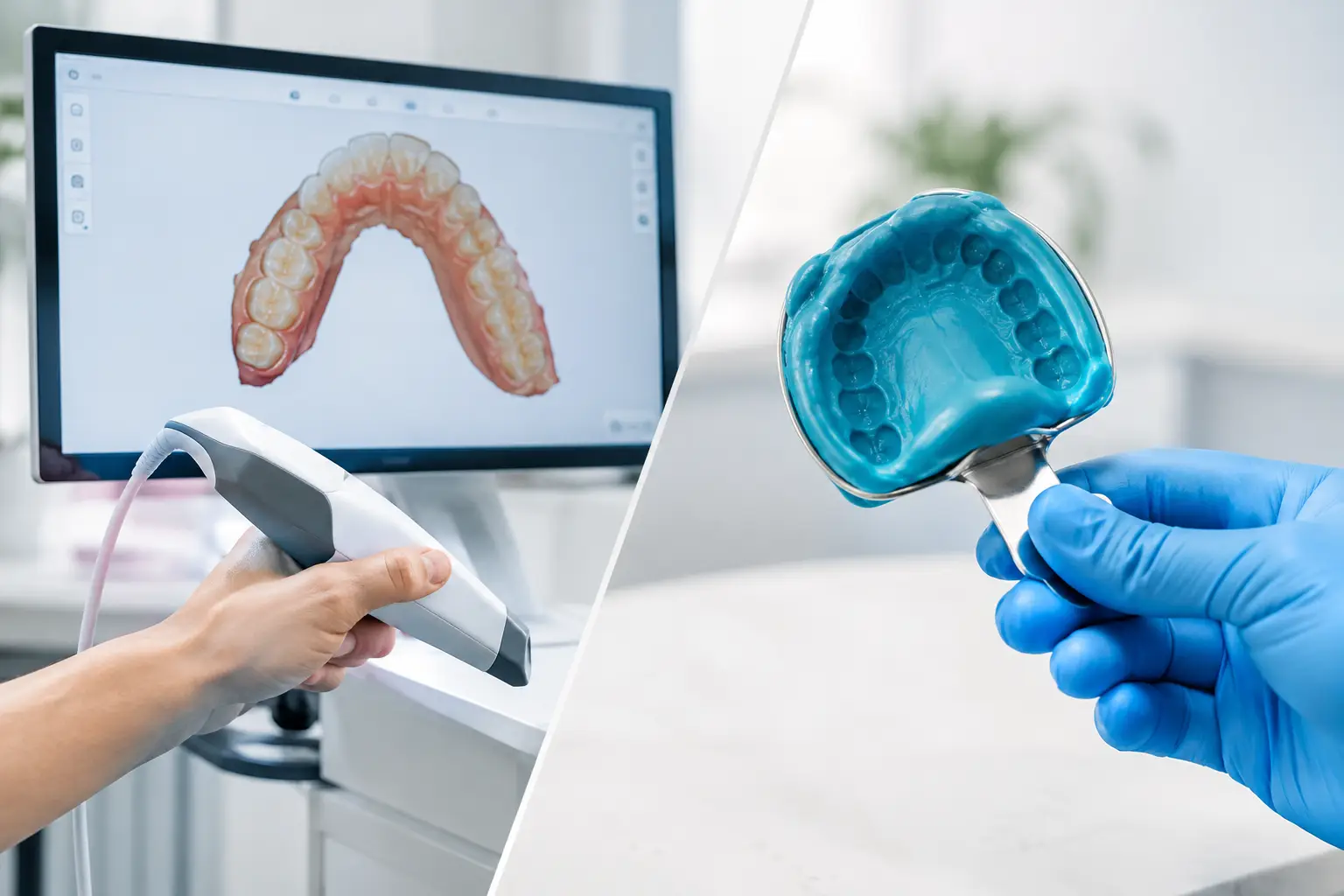
A digital dental scan uses a small handheld camera to capture thousands of detailed images of your teeth and gums. As the scanner moves around your mouth, those images are combined into a three-dimensional model on a screen.
Instead of biting into a tray filled with impression material, you can usually relax while the scan is completed in a few minutes. You may hear a quiet sound from the scanner and feel the wand move from tooth to tooth, but there is no setting material and no need to wait with a tray in your mouth.
For patients who like to understand what is happening, one of the most reassuring parts of a digital scan is visibility. Your dental team can often show you the model right away. When planning cosmetic treatment, that model can become part of a larger smile-design conversation, helping you see how changes to shape, alignment, or balance may work with your natural features.
What Are Traditional Dental Impressions?
Traditional impressions create a physical mold of your teeth. A dentist or dental assistant places a tray filled with a soft material over your upper or lower teeth. You bite down or hold still for a short period while the material firms up, then the tray is gently removed.
The finished impression is sent to a dental lab or used to create a stone model. It has been a dependable part of dentistry for decades and can produce very useful information for restorations, appliances, and certain treatment plans.
Still, traditional impressions are not everyone’s favorite part of a dental appointment. The material can feel bulky, and some patients find the sensation challenging, particularly if they have a strong gag reflex, difficulty breathing through their nose, or anxiety about having something in their mouth.
Digital Scans Versus Impressions: The Comfort Difference
For most patients, digital scanning is the more comfortable experience. The scanner is small, the process can pause when needed, and there is no impression material that may trigger gagging. If you need a moment to swallow, sit up, or take a breath, your team can simply stop and continue when you are ready.
That flexibility matters. A dental visit should not feel like something you have to endure. For someone who has postponed a crown, aligner consultation, or cosmetic treatment because of a past impression experience, a digital scan can remove one more barrier to getting care.
Traditional impressions may still feel manageable for many people, especially when they are performed thoughtfully and efficiently. Your dental team can explain each step, choose the right tray size, and help you stay comfortable throughout. But if anxiety or gagging has been an issue before, say so before treatment starts. That information helps your team plan around you rather than asking you to push through discomfort.
Accuracy Depends on the Treatment
Digital scanning is highly accurate for many common dental needs. It is frequently used for crowns, bridges, veneers, clear aligners, night guards, whitening trays, and digital smile planning. Because the model appears on screen immediately, the team can often identify a missed area right away and rescan it instead of scheduling another appointment.
That real-time feedback can also make planning more efficient. A digital model can be shared with a dental lab and used to design restorations with careful attention to fit, bite, and appearance. For cosmetic cases, it gives patients a more active role in the conversation. You are not simply told what will happen. You can see the starting point and discuss the details that matter to you.
There are situations where a traditional impression may still be the better clinical choice, or where your dentist may use both methods. For example, capturing certain deep areas around a prepared tooth, managing moisture near the gumline, or recording movable soft tissue for a full denture can be more complex. Patients with very few remaining teeth, significant gum changes, or challenging implant cases may benefit from an additional impression technique.
This is not a contest with one winner for every person. It is a clinical decision guided by precision, not convenience alone.
Why Digital Scans Can Make Cosmetic Planning Easier
When you are considering veneers, bonding, crowns, or a more complete smile makeover, details matter. The length of a tooth, the curve of a smile, the amount of tooth that shows when you speak, and the way your bite comes together can all influence the final result.
A digital scan creates a detailed foundation for those conversations. Combined with photographs and smile-design software, it can help your dentist evaluate proportions and preview possible changes before treatment begins. That does not mean a computer makes every decision. Beautiful, natural-looking results still require clinical judgment, experience, and an understanding of what feels authentic to you.
The benefit is clarity. You can ask questions early, refine your goals, and better understand why a certain approach is being recommended. For an elective investment such as veneers or a smile makeover, that confidence is valuable.
What the Appointment Usually Feels Like
If you are having a digital scan, your appointment is generally straightforward. Your teeth may be gently dried so the scanner can capture clear images. The team guides the scanner around the inside and outside of your teeth and across the biting surfaces. You can usually breathe normally and close your mouth for a quick break if needed.
If a traditional impression is recommended, you will be told what to expect before the tray is placed. The material may feel thick or cool, and you will need to keep still while it sets. The process is brief, but it can feel longer when you are nervous. A calm explanation, a comfortable position, and a team that checks in with you can make a real difference.
Whether your treatment involves scanning or impressions, you should never feel rushed to pretend you are comfortable. Ask for a pause. Let the team know if you have had a difficult experience in the past. Small comfort details, from a neck pillow to noise-canceling headphones, can help you settle in and feel more in control.
Questions to Ask Before Your Treatment
You do not need to know the technical details before your visit, but a few simple questions can help you feel prepared. Ask whether a digital scan is appropriate for your treatment, what the process will feel like, and whether you will be able to see the images or treatment preview. If an impression is recommended, ask why it is the best option for your specific case.
It is also helpful to share what tends to make dental appointments hard for you. Maybe it is a gag reflex, jaw soreness, trouble lying back, or uncertainty about cosmetic results. There is no need to minimize it. Good dental care begins with listening.
The right method is the one that gives your dentist the information needed for excellent care while helping you feel respected throughout the process. Whether that means a quick digital scan, a traditional impression, or a carefully chosen combination of both, you deserve an experience that feels calm, understandable, and built around your needs.