A missing tooth can change more than a smile. You may start chewing on one side, hiding your teeth in photos, or noticing that speaking feels slightly different. The best options for missing teeth are not one-size-fits-all. The right choice depends on where the tooth is located, how many teeth are missing, the health of your gums and jawbone, your timeline, and what will help you feel most confident every day.
A thoughtful consultation should never feel rushed or confusing. With digital scans, clear visual treatment planning, and a conversation about your goals, you can understand what each option involves before making a decision.
Why Replacing a Missing Tooth Matters
It is tempting to wait, especially when the missing tooth is toward the back of your mouth. But teeth work as a team. When one is lost, nearby teeth can gradually shift into the open space. The opposing tooth may also move farther out of position over time.
That movement can change your bite and make certain areas harder to clean. A missing tooth may also affect chewing efficiency, place extra pressure on other teeth, and contribute to jawbone loss in the area. Replacing it is often about protecting your long-term oral health as much as restoring your appearance.
Best Options for Missing Teeth: What to Consider
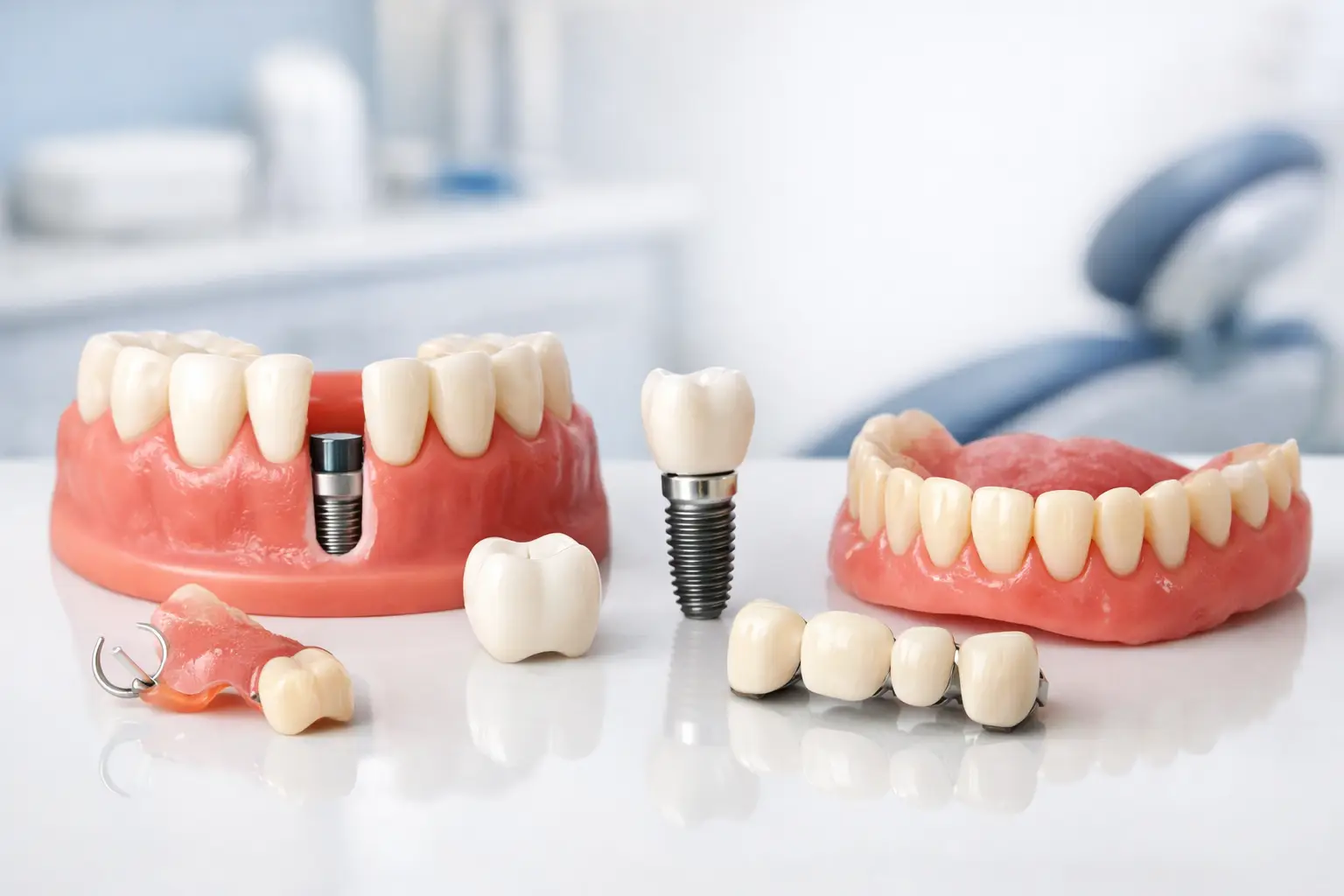
The most common solutions are dental implants, bridges, and removable dentures. Each can restore function and improve the look of your smile, but they do so in different ways.
Before focusing on a particular treatment, consider a few practical questions. Do you want a fixed option that stays in place? Are the teeth beside the gap healthy? Is preserving jawbone a priority? Do you need to replace one tooth, several teeth, or an entire arch? Your answers help narrow the choices.
Dental Implants
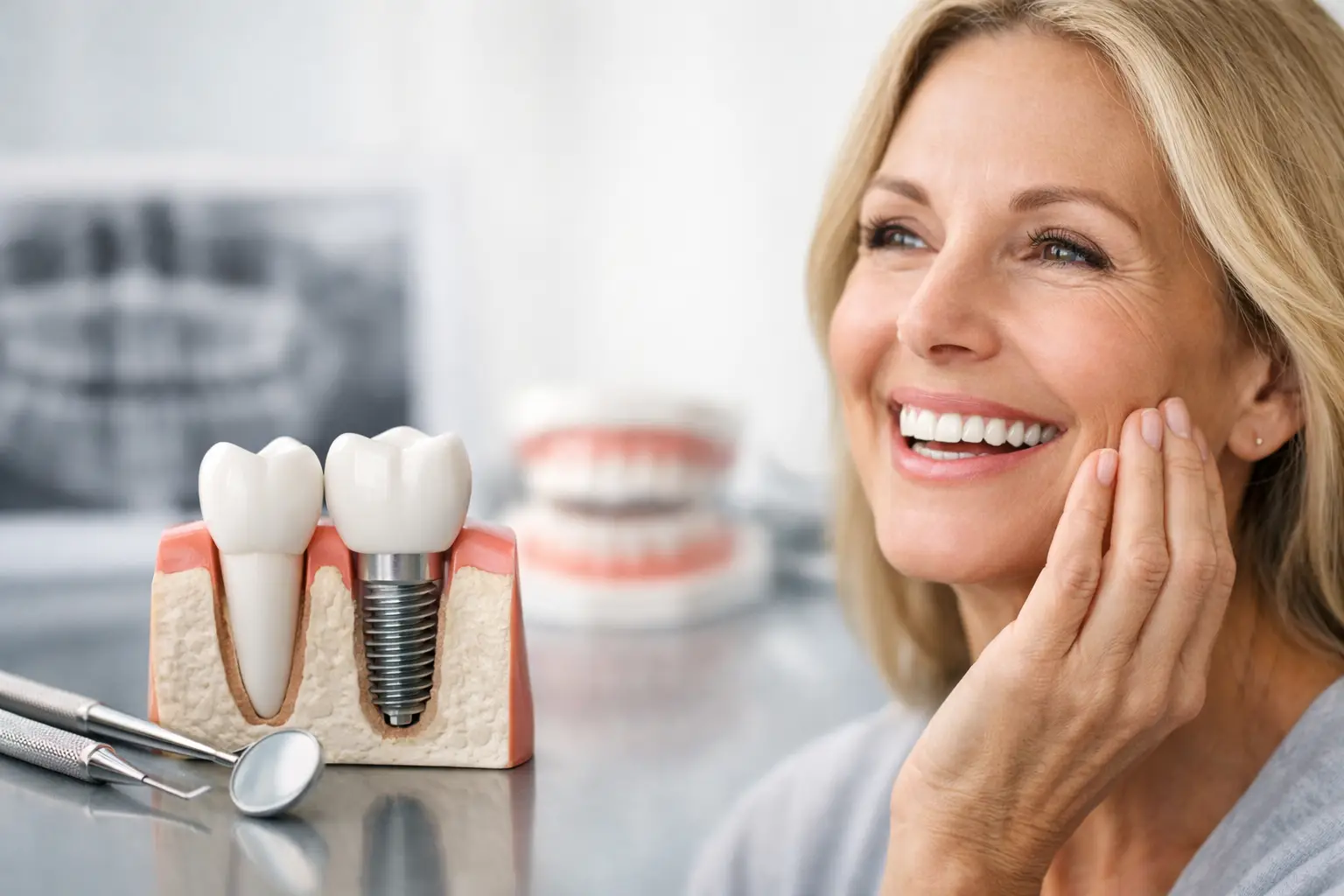
A dental implant replaces the tooth root as well as the visible tooth. A small titanium post is placed in the jawbone, where it integrates with the bone over time. Once healed, it supports a custom crown, bridge, or full-arch restoration.
For a single missing tooth, an implant with a crown is often the most natural-looking and independent solution. It does not require reshaping the healthy teeth beside the gap, and it can help maintain bone in the area. Implants are also stable, so many patients find they can eat, speak, and smile with confidence.
The trade-off is time and upfront investment. Implant treatment usually involves a surgical procedure and a healing period before the final restoration is placed. If bone has thinned after tooth loss, bone grafting may be recommended first. While that can extend the timeline, it may create a stronger foundation for a long-lasting result.
For patients missing multiple teeth, implants can support an implant bridge without placing an implant for every missing tooth. For a full arch, several strategically placed implants can secure a fixed full-arch restoration or stabilize a removable denture. The best approach depends on bone support, bite forces, overall health, and personal preference.
Fixed Dental Bridges
A traditional dental bridge fills a gap by connecting a replacement tooth to crowns placed on the teeth next to it. It is fixed in place, meaning you do not remove it to sleep or clean it. For many people, a bridge offers a dependable, attractive way to restore a missing tooth without the surgical component of an implant.
A bridge may be especially practical when the neighboring teeth already need crowns because of large fillings, cracks, or existing restorations. In that situation, restoring the adjacent teeth and the missing space together can make excellent sense.
The main consideration is that a traditional bridge requires preparation of the neighboring teeth. Unlike an implant, it does not replace the tooth root, so it does not directly prevent bone loss beneath the missing tooth. Cleaning also requires a little more attention, since you will need to clean under the replacement tooth with a floss threader or specialized interdental cleaner.
With careful design, quality materials, and consistent home care, a bridge can look beautifully natural and serve you well for years.
Removable Partial Dentures
A partial denture is a removable appliance designed to replace one or more missing teeth while using your remaining teeth for support. Modern partials can be more refined and comfortable than many people expect, particularly when they are carefully planned around your bite and smile.
This can be a sensible choice when several teeth are missing in different areas, when surgery is not the right fit, or when you want a more budget-conscious way to restore function. A partial may also serve as a temporary solution while you prepare for implant treatment.
Because it is removable, a partial denture requires daily cleaning and an adjustment period. Some people notice a bit of movement at first, and it may not feel as natural as a fixed bridge or implant-supported restoration. Still, for the right situation, it can restore a fuller smile and make meals far more comfortable.
Full Dentures and Implant-Supported Dentures
When all teeth in the upper or lower arch are missing, a full denture can restore the appearance of a complete smile and support facial contours. Conventional dentures rest on the gums and are removable. They are often an accessible starting point, but lower dentures in particular can shift during eating or speaking because the lower jaw has less surface area for support.
Implant-supported dentures offer added stability. Depending on the design, the denture may snap securely onto implants but remain removable for cleaning, or it may be fixed in place and removed only by the dental team. Patients who have struggled with loose dentures often appreciate the improved confidence and chewing power that implant support can provide.
Not everyone needs or wants a fixed full-arch solution. A removable implant-supported denture can be an excellent middle ground, combining stability with simpler hygiene and a lower cost than some fixed options.
Options That May Work in Specific Cases
In select situations, a resin-bonded bridge may replace a front tooth with minimal alteration to neighboring teeth. This option is often more conservative, but it is not ideal for every bite or for areas that take heavy chewing pressure.
Orthodontic treatment may also be part of the plan. Clear aligners can sometimes move teeth to close a small space or create the ideal room for an implant or bridge. If a tooth was lost because of gum disease, periodontal treatment is usually the first priority. A replacement tooth needs healthy gums and a stable foundation.
How to Choose the Right Tooth Replacement
The best treatment is the one that works for your mouth and your life, not simply the option that sounds most advanced. An implant can be a wonderful long-term investment, yet a bridge may be the smarter choice if adjacent teeth need crowns. A partial denture may be the appropriate solution if multiple teeth are missing and you need a non-surgical path.
During a personalized exam, your dentist should evaluate your gums, bone levels, bite, remaining teeth, and medical history. Digital imaging and scans help make the conversation more precise. You should also discuss appearance. The shape, shade, and proportions of a replacement tooth matter, especially in the smile zone.
Cost deserves an open conversation as well. Insurance coverage varies by treatment and plan. Financing options and membership plans can help make care more manageable, but the goal should be clarity, not pressure. Ask about the expected lifespan of each option, maintenance needs, and likely future costs so you can compare value over time.
A Calmer Way to Start Treatment
If dental treatment makes you uneasy, let the team know before your appointment begins. A comfortable experience can include a slower pace, transparent explanations, and small details that help you settle in, such as noise-cancelling headphones, an eye mask, or a neck pillow. At SoFlo Dental Studio, the goal is to make every step feel understandable and personal, from your first scan to your final restoration.
You do not have to decide everything in one visit. Start by getting a clear picture of your oral health and the options that fit your goals. Replacing a missing tooth is not about chasing a perfect smile. It is about eating comfortably, protecting what is healthy, and feeling at ease when you smile again.