A dental implant can feel so much like a natural tooth that it is easy to forget it needs specialized attention. That is good news for comfort, but it also means daily habits matter. Knowing how to maintain dental implants helps protect the healthy gum tissue and bone that hold your restoration in place, so your investment can keep supporting a confident, comfortable smile.
Implants are designed to be a long-term solution, not a worry you carry around. With gentle home care and regular professional checkups, most patients can enjoy them for many years. Relax. A consistent routine goes a long way.
How to Maintain Dental Implants Every Day
The implant itself cannot get a cavity, but the tissue around it can still develop inflammation or infection. Plaque can collect at the gumline and beneath a crown, bridge, or implant-supported denture just as it can around natural teeth. Left alone, that inflammation can progress to peri-implant disease, which may affect the bone supporting the implant.
Your goal is simple: clean the visible restoration, the gumline, and the spaces around the implant without being overly aggressive.
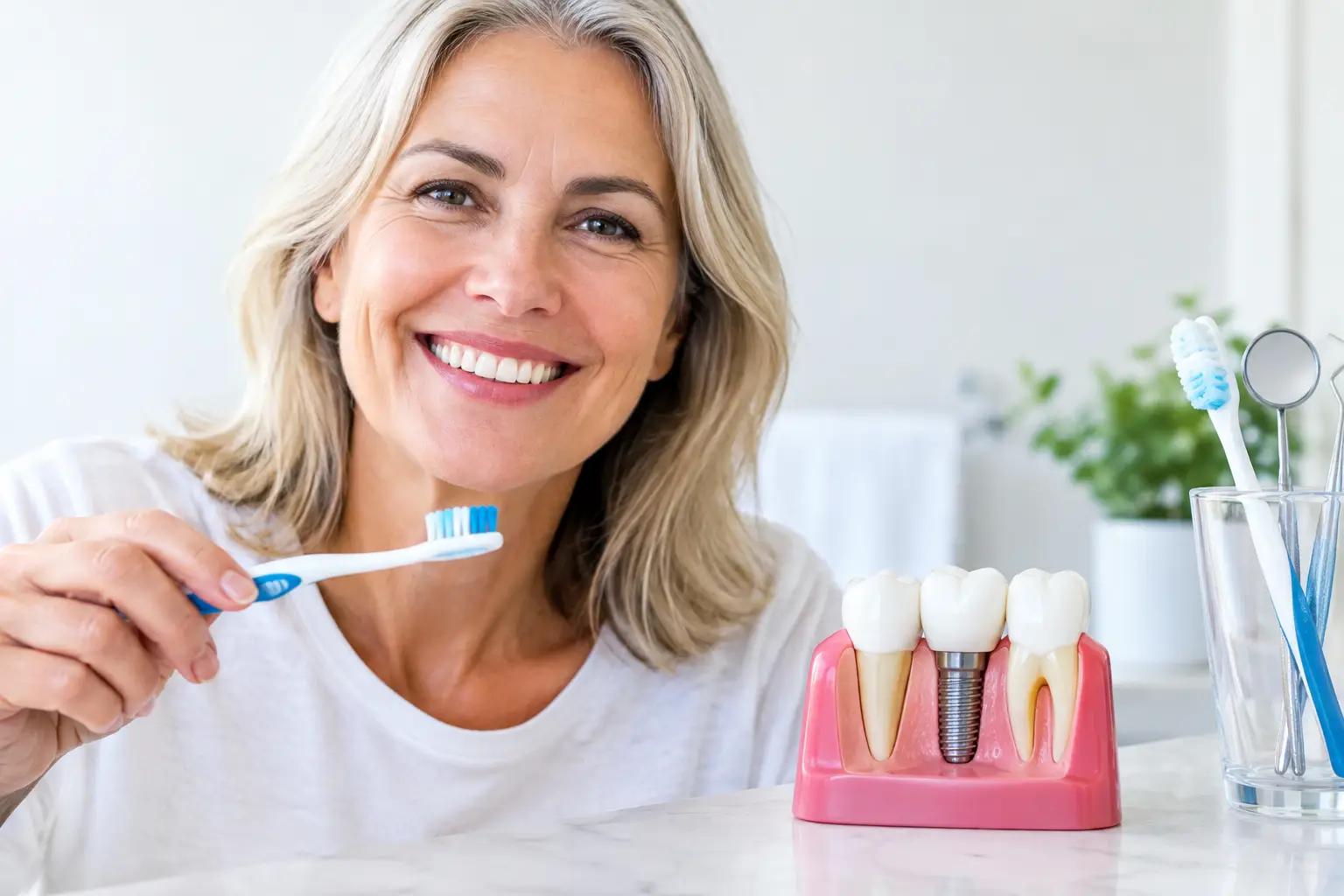
Brush twice a day for two full minutes using a soft-bristled manual or electric toothbrush. Angle the bristles gently toward the gumline, including where the implant crown meets the gums. Firm scrubbing is not cleaner scrubbing. It can irritate delicate tissue and make an already sensitive area feel worse.
Clean between your teeth and around the implant once daily. The right tool depends on the type and location of your restoration. Floss may work well around a single implant crown, while an interdental brush, floss threader, or water flosser can be more practical for bridges and implant-supported dentures. Your dental team can show you exactly how to clean your specific restoration without tugging or forcing anything.
A useful daily routine includes:
- Brushing gently in the morning and before bed
- Cleaning between teeth and around implant areas once a day
- Brushing your tongue to reduce bacteria and freshen breath
- Rinsing thoroughly after meals when brushing is not possible
- Taking out removable implant dentures at night, if instructed, to clean both the denture and your gums
For most patients, a non-abrasive toothpaste is a comfortable choice. Highly abrasive whitening pastes can dull certain restoration materials over time, while harsh products may bother sensitive gums. If you would like to brighten your natural teeth, ask your dentist which whitening approach will blend well with your implant crown. A crown will not whiten in the same way natural enamel does.
Pay Attention to the Gumline
Healthy tissue around an implant is usually firm, comfortable, and free of ongoing bleeding. A small amount of tenderness right after a procedure is expected, but new symptoms months or years later deserve attention.
Call your dentist if you notice bleeding when brushing, swollen or receding gums, persistent bad breath, a bad taste, discomfort when chewing, or any feeling that the implant restoration is moving. A loose crown or bridge does not always mean the implant itself has failed, but it should be evaluated promptly. The earlier a concern is addressed, the more options there may be to protect the implant.
Do not wait for pain. Peri-implant inflammation can be quiet in its early stages. Regular exams and digital X-rays allow your dental team to monitor the bone and tissue that are not visible in a bathroom mirror.
Keep Regular Hygiene Visits
Home care is essential, but it cannot replace professional maintenance. Dental hygienists use instruments and techniques selected to clean around implants safely without scratching the restoration surface. Scratches can create places for plaque to collect, so the tools and approach matter.
Many implant patients do well with hygiene visits every six months. Others benefit from visits every three or four months, particularly if they have a history of gum disease, diabetes, dry mouth, smoking or vaping habits, or difficulty cleaning beneath a bridge. This is not a one-size-fits-all schedule. Your dentist will recommend an interval based on your gum health, restoration design, and risk factors.
At these visits, your team can check the bite, inspect the crown or denture, measure the health of the surrounding tissue, and look for signs of wear. A bite that changes over time can place excess pressure on an implant, especially if you clench or grind your teeth.
Protect Your Implant From Excess Pressure
Dental implants are strong, but they are not meant to open packages, crack ice, or bite into hard objects. Avoid chewing ice, hard candy, pens, and fingernails. Be mindful with very hard foods such as popcorn kernels, nutshells, and bone-in meat. You do not need to avoid enjoyable foods forever, but a little care prevents unnecessary chips, loose screws, and damage to the crown.
If you grind or clench your teeth, a custom nightguard may be one of the most valuable ways to protect your implant and your natural teeth. Grinding can place repeated force on restorations while you sleep, often without your awareness. A properly fitted guard cushions that force and can help preserve your bite.
For sports or activities with a risk of facial impact, wear a protective mouthguard. This matters whether you have one implant or a full implant-supported restoration.
Lifestyle Choices That Support Implant Health
Smoking and vaping can make it harder for the gums and bone around implants to stay healthy. Nicotine reduces blood flow and can interfere with healing and the body’s ability to manage inflammation. If quitting feels difficult, even an honest conversation with your dental team is a meaningful first step toward support.
Nutrition also plays a quiet but real role. A balanced diet that includes protein, fruits, vegetables, and calcium-rich foods supports overall oral health. Staying hydrated helps, too, especially if medication or medical treatment leaves you with dry mouth. Saliva naturally helps wash away food particles and bacteria.
If you have diabetes, keeping blood sugar well managed can support gum health and healing. Be sure your dentist knows about changes in your health history or medications. Care is more effective when it reflects the whole picture, not just what is happening in one tooth.
Cleaning Different Types of Implant Restorations
A single implant crown is often cared for much like a natural tooth, with extra attention at the gumline and between the implant and neighboring teeth. Floss should slide gently through the contact areas. If it catches, shreds, or feels impossible to use, mention it at your next visit rather than forcing it.
An implant bridge needs careful cleaning beneath the replacement teeth, where food and plaque can collect. A floss threader, specialized implant floss, or water flosser may help reach these areas. Your dentist or hygienist can recommend the simplest routine you will actually follow consistently.
For an implant-supported denture, daily cleaning is still non-negotiable. Removable dentures should be taken out and cleaned as directed, while the gums, tongue, and attachment areas should be cleaned thoroughly. Fixed full-arch bridges stay in place, but they still need cleaning underneath with the tools recommended for their design.
At SoFlo Dental Studio, we believe instructions should feel clear, not clinical or overwhelming. A quick hands-on demonstration can make the difference between guessing at home and feeling confident in your routine.
When to Schedule an Implant Check
Schedule a visit if something feels different, even if it does not hurt. A crown that feels high when you bite, a clicking sound, food repeatedly getting trapped, or gums that bleed in one spot are all worth checking. Do not try to tighten, glue, or adjust any part of the restoration yourself.
If you have not had your implant evaluated in more than six months, this is a good time to get back on track. Your appointment can be calm, unrushed, and centered on keeping small concerns small.
Your implant was placed to make daily life easier – smiling in photos, enjoying meals, and speaking without hesitation. Give it the same thoughtful care you give the rest of your health, and let your dental team handle the details you cannot see.