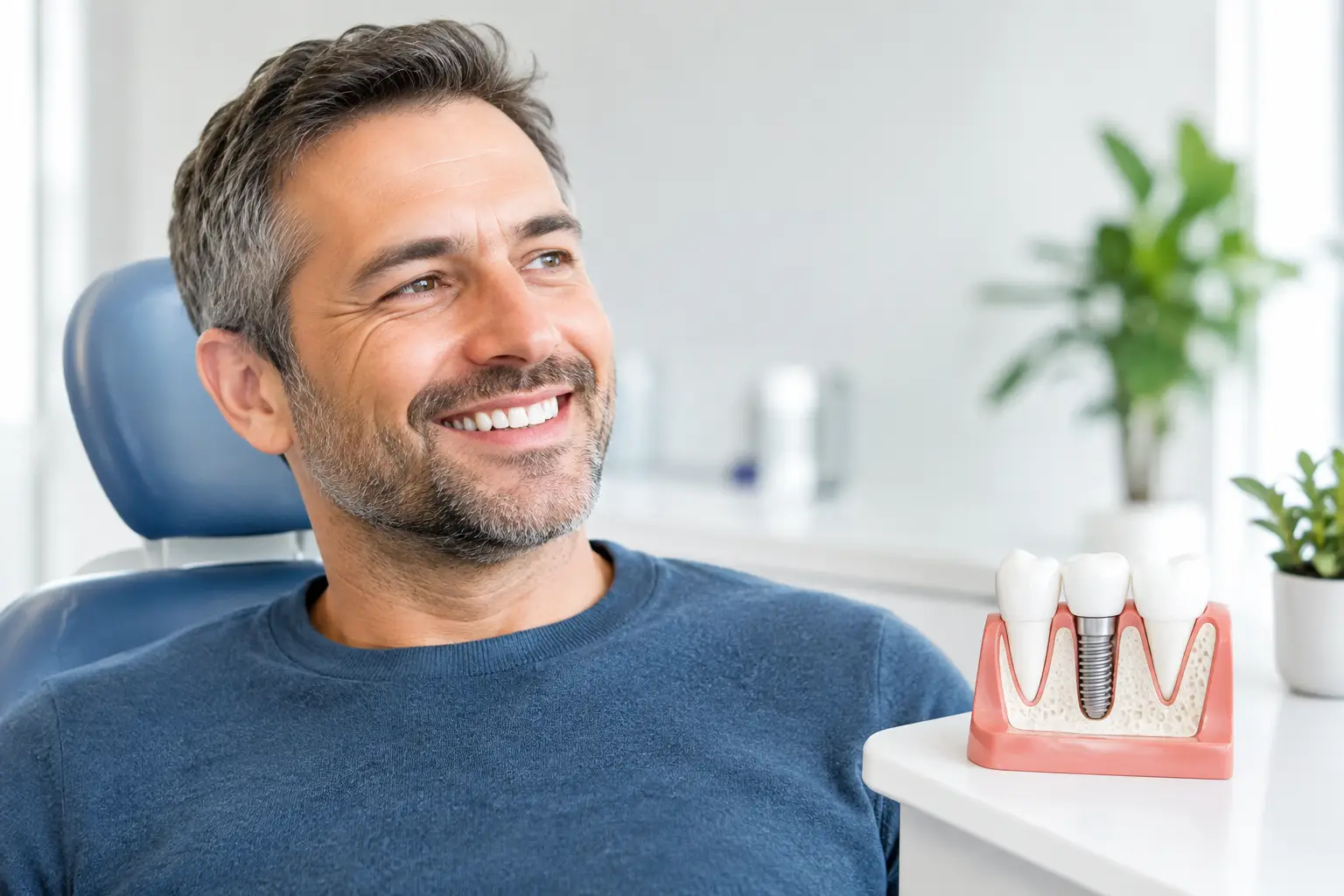
The first few days after implant surgery should feel quiet, supported, and predictable, not like a test of how tough you are. This dental implant recovery guide explains the normal healing process, the small choices that protect it, and the signs that deserve a call to your dental team. Your personal post-treatment instructions always come first, because the details of your procedure matter.
An implant is designed to replace a missing tooth from the root up. After placement, the implant needs time to bond with your jawbone in a process called osseointegration. That bond is what gives an implant its long-term strength. Healing is not usually dramatic, but it does ask for patience, gentle habits, and a little planning around meals and activity.
The First 24 Hours: Rest Is Productive
Once the numbing medication fades, mild tenderness, swelling, and some light bleeding are common. Your dentist may place gauze over the surgical area. Bite with steady, gentle pressure as directed, changing the gauze only when needed. A small amount of oozing can look more alarming than it is when mixed with saliva.
Plan to rest with your head elevated the day of surgery. An ice pack placed on the outside of the cheek in short intervals can help limit swelling. Take prescribed or recommended medication exactly as instructed, ideally before discomfort becomes difficult to manage. If you received sedation, arrange for a responsible adult to drive you home and stay available while you rest.
Avoid vigorous rinsing, spitting, using a straw, smoking, vaping, and drinking alcohol during this early period. These actions can disturb the blood clot and irritate healing tissue. Smoking and vaping deserve special attention: nicotine reduces blood flow and can significantly raise the risk of implant complications. If quitting feels overwhelming, let your dental team know before treatment so you can discuss practical support.
What to Eat While Your Implant Heals
Choose foods that are soft, nourishing, and easy to eat without chewing near the surgical site. Cool or room-temperature options are usually most comfortable on day one. Think yogurt, scrambled eggs, smoothies eaten with a spoon, oatmeal, mashed vegetables, soups that are not hot, cottage cheese, and tender fish.
For the next several days, gradually add more texture as comfort allows. The goal is not to eat only liquids for weeks. It is to avoid putting direct pressure on the implant area before your dentist says it is ready. Crunchy chips, nuts, popcorn, crusty bread, sticky candy, and tough meats can get trapped near the site or place too much force on it.
Hydration matters, too. Drink plenty of water, but skip straws until your clinician clears them. If you have a temporary tooth or a full-arch restoration, follow the diet guidelines precisely. A temporary restoration can look natural and help you feel confident socially, but it is not meant to handle the same biting force as a final crown.
Your Dental Implant Recovery Guide for Cleaning
A clean mouth supports a healthy recovery, but the surgical area needs a gentle approach. On the first day, many patients are asked not to brush directly over the incision. After that, you may be directed to use a soft toothbrush around the area with care. Do not pull at sutures or scrub the gum tissue.
Your dentist may recommend a prescription rinse, a warm saltwater rinse, or both. If using saltwater, let it move around your mouth gently rather than swishing forcefully. Keep brushing and flossing the teeth away from the surgical site as usual. Plaque does not pause while you heal, and keeping the rest of your mouth healthy helps protect your investment.
Instructions can differ if you had a bone graft, sinus lift, tooth extraction, multiple implants, or immediate implant placement. For example, patients who have had a sinus procedure may need to avoid blowing their nose or creating pressure through sneezing. That is why a one-size-fits-all checklist is never a replacement for your personalized care plan.
What Healing Usually Looks Like
Swelling often reaches its peak around day two or three, then gradually improves. Bruising can occur, especially after more involved procedures, and may take a week or two to fade. Tender gums, minor jaw stiffness, and a temporary change in your eating routine are also expected for many patients.
The gum tissue often looks much better before the implant has fully integrated with the bone. While the visible incision may heal in a few weeks, osseointegration commonly takes several months. During this time, your dentist monitors healing and decides when it is appropriate to move forward with an abutment and final crown, if those were not placed earlier.
Some patients receive an implant immediately after an extraction, while others need a healing period or bone graft first. Some receive a same-day temporary tooth, while others do not. Neither approach is automatically better. The right timeline depends on bone quality, gum health, bite forces, the location of the implant, and your overall health.
Activity, Work, and Everyday Comfort
Many people return to desk work or light routines within one to three days. If your job is physically demanding, involves heavy lifting, or keeps you in the South Florida heat for long periods, give yourself more recovery time if possible. Strenuous exercise can increase throbbing and bleeding during the first few days.
Sleep with your head slightly elevated for the first night or two, especially if swelling is noticeable. Wear your night guard only if your dentist tells you to. If you clench or grind your teeth, protecting the implant from excess force may be an important part of your long-term plan.
You should also keep follow-up visits. These appointments are not a formality. They allow your dentist to check the gum tissue, remove sutures if needed, confirm that healing is progressing, and adjust the plan before a small concern becomes a larger one.
When to Call Your Dental Team
Discomfort and swelling should trend in the right direction, even if the process is not perfectly linear. Contact your dental office promptly if pain becomes severe or worsens after a few days, bleeding does not slow with directed pressure, swelling continues to increase, or you develop a fever.
You should also call if you notice pus, a persistent bad taste or odor, numbness that does not improve as expected, a loose implant or temporary tooth, or an allergic reaction to medication. Do not try to tighten, glue, or adjust anything yourself. A quick conversation can provide reassurance, or help your team address a problem early.
Protecting Your Implant for the Long Term
Once your final restoration is in place, treat your implant like a natural tooth with one key difference: it cannot develop a cavity, but the gums and bone around it can still become inflamed or infected. Daily brushing, cleaning between teeth, regular hygiene visits, and professional monitoring remain essential.
If you have a history of gum disease, diabetes, dry mouth, grinding, or tobacco use, your maintenance plan may need extra attention. These factors do not necessarily rule out implants, but they can affect healing and long-term success. Clear, honest conversations help your dentist plan around them.
At SoFlo Dental Studio, implant care is planned with the same calm attention given to the recovery experience. From clear explanations to a comfortable, unhurried environment, the goal is for you to know what comes next and feel supported at every stage.
Give yourself permission to take recovery slowly. A few days of thoughtful care and a few months of patient healing can support a restoration built to help you eat, speak, smile, and feel like yourself again.